

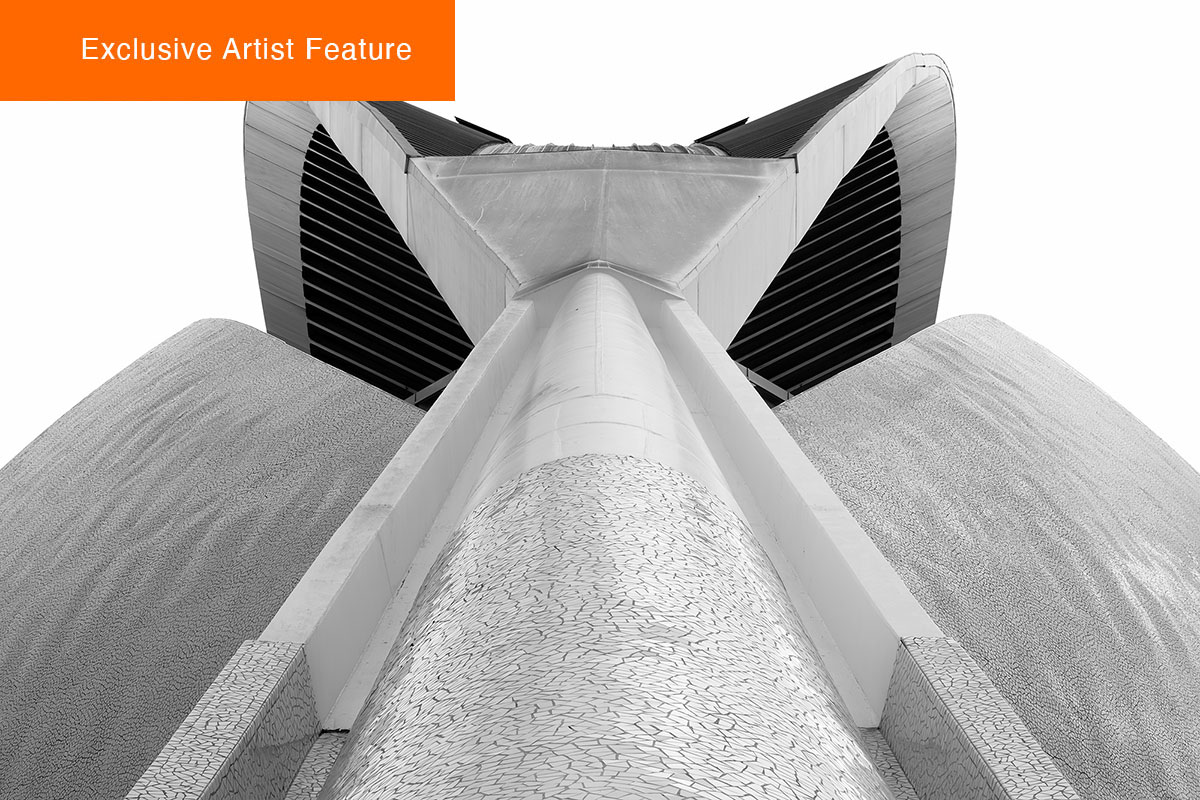
Born in 1965 in Montreal, Quebec, Canada, Doug Caplan approaches photography as both a craft of seeing and an act of shaping. His first camera—a black-and-white Polaroid instant—was a gift from his parents when he was a teenager, and it became his first encounter with the magic of image-making. The hiss of the film, the faint chemical scent, the waiting for the picture to emerge—all of it lingered long after the moment passed. Yet, for many years, photography was more of a quiet fascination than a pursuit. It wasn’t until the early 1990s, after marriage, that Caplan rekindled his relationship with the medium. This return brought new insight: a blend of analog patience and digital clarity. Today, his work reflects that balance—a harmony of structure and emotion, rooted in the tactile yet refined by precision.
Reading Architecture
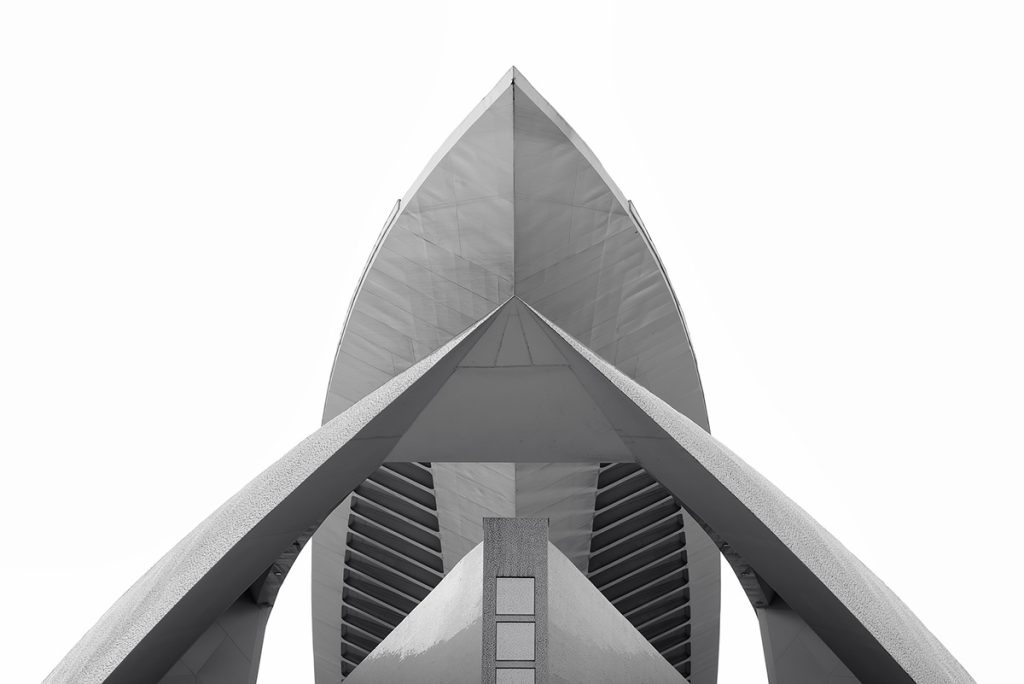
Caplan’s photography is an ongoing study of form. His gaze is drawn to geometry, proportion, and rhythm—the visual language that gives architecture its pulse. For him, a building isn’t just a creation of engineers and designers; it’s a dialogue between imagination and material. His compositions are carefully balanced, emphasizing the symmetry and calm that emerge when design and observation meet. The decision to work in black and white is intentional—it strips the world to essentials, revealing how light defines space and how texture speaks. Each frame invites stillness, urging the viewer to consider how tension and equilibrium coexist within the built environment.
Architecture as a Living Presence
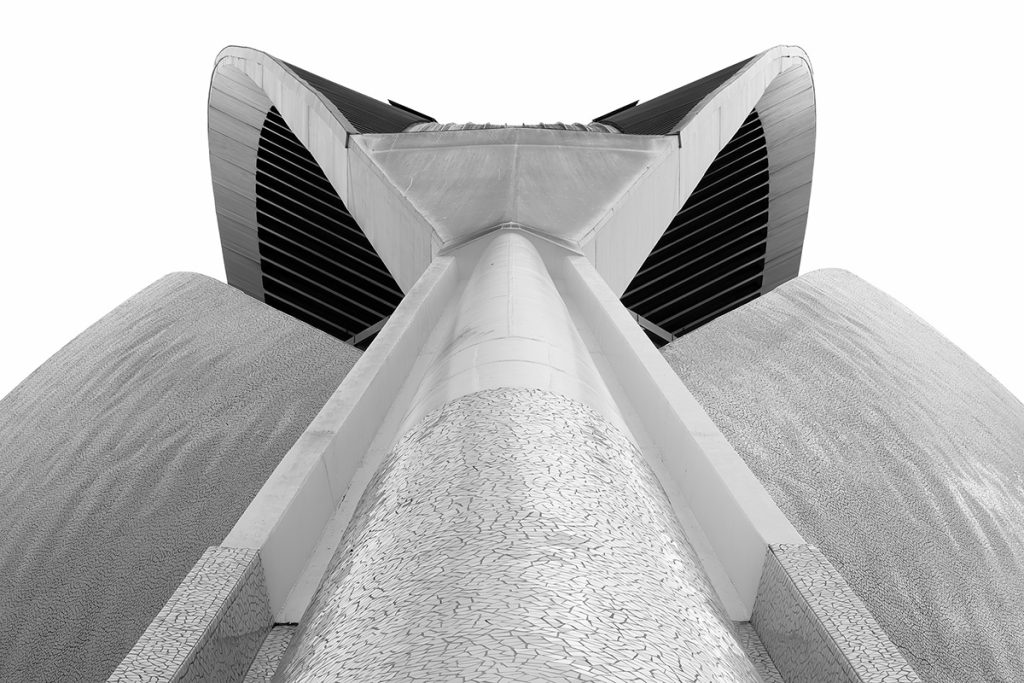
One of Caplan’s most compelling series centers on the Palau de les Arts Reina Sofía in Valencia, Spain. His approach transcends documentation—he doesn’t merely record the structure but reveals its spirit. Seen through his lens, the building rises like a living form. Its curves unfold like wings, its vertical core resembles a spine. What could be a static monument becomes a symbol of movement and breath. In this transformation, Caplan’s photographs blur the boundary between architecture and organism. His images suggest that human design mirrors nature more closely than we realize, translating gravity and balance into visual poetry.
Space and Simplicity
Caplan’s visual language leans toward minimalism. He eliminates excess, allowing form and space to interact freely. The absence of color sharpens perception; tone, light, and texture carry the weight of expression. Many of his images are composed against luminous white, as though the subject floats in suspension. This creates a meditative quiet—less emptiness, more openness. His photographs recall the spirit of mid-century architectural photography, yet they feel entirely present-day. Caplan’s sensibility bridges eras, where the patience of film meets the precision of pixels, and the act of seeing becomes an act of refinement.
The Language of Light
Light is central to Caplan’s work—not as illumination, but as structure. He treats it like a tangible element, shaping his subjects with care. His control of exposure lends concrete surfaces an unexpected softness, revealing detail without stripping mystery. The way light grazes an edge or dissolves into shadow becomes its own narrative. In his photographs, light doesn’t simply reveal form—it builds it. This sensitivity transforms architecture into abstraction, giving physical matter an ethereal quality. His images occupy a rare space between solidity and air, between reality and perception.
The Poetics of Geometry
Though grounded in order, Caplan’s photography hums with quiet emotion. The balance he seeks in structure often mirrors the balance he finds in thought. His compositions carry a reflective calm, where upward lines evoke both human ambition and humility. There’s an introspective rhythm to his work—geometry as meditation. His images suggest that design isn’t just functional—it’s expressive, a reflection of the human desire to make sense of space, to find stillness within structure.
Precision and Reflection
Doug Caplan’s art stands between two worlds: the deliberate patience of traditional photography and the fluid sharpness of digital form. Each image he creates is more than a record—it’s an exploration. He approaches architecture as a collaborator, listening to its rhythm and responding through composition. His photographs invite us to pause, to look more closely, to rediscover the relationship between space and emotion.
Caplan doesn’t merely photograph buildings; he translates thought into visual language. In every curve, every angle, and every quiet expanse of light, he reminds us that seeing is not passive—it’s an act of understanding. His camera becomes an instrument of awareness, revealing how structure and silence can exist in perfect balance.
